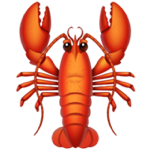

The Mascot That Chose Itself
Every successful open source project needs a mascot. Linux has Tux the penguin. Docker has the whale. And OpenClaw has — a lobster?
On the surface, it seems arbitrary. Why would an AI assistant platform choose a bottom-dwelling crustacean as its symbol? But dig deeper into lobster biology, behavior, and mythology, and you'll find that Homarus americanus might be the most perfect mascot in the history of open source software.
The connection isn't just clever wordplay on "claw" (though that's part of it). The lobster embodies — sometimes eerily — the philosophical underpinnings of decentralized, open, resilient systems.
Let's crack the shell and see what's inside.
The Claw: Power Through Specialization
A lobster's most distinctive feature is its claws — specifically, the asymmetrical pair that serve different functions. The larger "crusher" claw is built for power. The smaller "cutter" claw is built for precision.
Sound familiar?
This is exactly how OpenClaw approaches AI assistance. The platform doesn't try to do everything in one monolithic codebase. Instead, it delegates to specialized skills — 56+ of them and counting — each optimized for a specific task:
- Web search skills for information retrieval
- Messaging skills for communication (WhatsApp, Telegram, iMessage)
- Smart home skills for device control
- System administration skills for server management
Just as the lobster uses its crusher claw to break open mussels and its cutter claw to extract the meat, OpenClaw routes tasks to the most appropriate skill. The platform is the nervous system; the skills are the specialized appendages.
The claw isn't just a name. It's an architecture.
Molting: The Open Source Lifecycle
Here's a fact about lobsters that should resonate with anyone who's maintained open source software: lobsters spend their entire lives molting.
As a lobster grows, its rigid exoskeleton becomes increasingly restrictive. Eventually, the animal must shed its shell entirely, emerging soft and vulnerable while a new, larger shell hardens underneath. During this period — which can last from several days to weeks — the lobster is defenseless. It hides under rocks. It doesn't eat. It's in a state of profound vulnerability.
But without molting, the lobster would die. The shell that protects it eventually becomes its prison.
This is the open source lifecycle in perfect metaphor.
OpenClaw itself has molted multiple times:
- Clawd: The original name, killed by legal threats
- Moltbot: The interim identity, transitional and soft
- OpenClaw: The hardened shell, post-molt, stronger than before
Each major version release is a molt. The platform sheds old APIs, deprecated integrations, outdated assumptions. For a period, things break. The community feels vulnerable. But then the new shell hardens, and the project emerges larger and more capable than before.
The alternative — never molting, never changing — is the proprietary software death spiral. The shell grows thicker, more restrictive, until the organism inside can no longer breathe.
Open source projects that survive are the ones willing to be vulnerable for a season.
The Decentralized Brain: No Single Point of Failure
Here's where it gets weird. And wonderful.
Lobsters don't have centralized brains. Not in the way humans do. Instead, they have a distributed network of ganglia — nerve clusters spread throughout their body. The largest concentration is in the head, but decision-making happens everywhere:
- Ganglia in each leg control walking reflexes
- Ganglia in the claws control grasping
- Ganglia along the digestive tract control processing
A lobster isn't one mind controlling many limbs. It's a swarm of simple minds coordinating toward shared goals.
If you've ever looked at OpenClaw's architecture, this should give you chills.
The platform is explicitly designed as a distributed system:
- The Gateway routes messages but doesn't process them
- Agents handle specific conversations independently
- Skills execute tasks autonomously
- Nodes (Mac, iOS, Android) provide local capabilities
There's no "brain" in the OpenClaw architecture. There's a nervous system. Messages flow through the Gateway like signals through a lobster's ventral nerve cord, triggering responses from whichever part of the system is best equipped to handle them.
This isn't just philosophy. It's resilience. A centralized system has a single point of failure. Kill the brain, kill the organism. But a distributed system? You can damage it significantly and it keeps functioning. Lobsters can lose legs, claws, even parts of their carapace, and continue living. OpenClaw can lose individual agents, skills, or even the Gateway itself, and conversations continue on other channels.
Decentralization isn't a bug. It's the survival strategy that evolved over 140 million years.
Regeneration: The Commit That Fixes Itself
One of the most remarkable features of lobsters is their ability to regenerate lost limbs. Lose a claw in a fight? No problem. The lobster will grow a new one over the course of several molts. The replacement might even be larger and stronger than the original.
Open source software has a similar regenerative capability, though we don't usually frame it this way.
When a proprietary software company abandons a product, it's dead. There's no mechanism for revival unless the company decides to invest resources. But open source? The community can fork, regenerate, rebuild.
We've seen this with OpenClaw directly. The project has faced:
- Legal threats (the Clawd rebranding)
- Security crises (the "Eating Lobster Souls" trilogy)
- Malware attacks (the "Twitter" skill incident)
Each time, limbs were lost. Trust damaged. Code compromised. But each time, the community regenerated. Patches were submitted. New safeguards grew. The replacement limbs — the security vetting system, the code scanner, the VirusTotal partnership — are arguably stronger than what they replaced.
A lobster that loses a claw and regenerates it doesn't just return to baseline. It comes back improved. The same is true of healthy open source projects. The wounds become the foundations of resilience.
The Color Change: From Blue to Red
Live lobsters aren't red. They're blue-green, or brown, or occasionally yellow, orange, or — in rare cases — bright blue. They only turn red when cooked, as heat destroys all pigment molecules except the red ones.
The transformation is dramatic. The animal goes in camouflaged for the ocean floor and emerges uniformly, unmistakably red.
There's a metaphor here about open source success.
Projects start camouflaged. They blend into the ecosystem, borrowing ideas from predecessors, wearing the protective coloration of "just another tool." But something happens when they reach sufficient temperature — community momentum, media attention, actual utility — that transforms them. They become unmistakable. Iconic. Red.
OpenClaw was blue-green once. A weekend hack. A WhatsApp relay experiment. Camouflaged among thousands of similar projects. Then the heat was applied: the viral launch, the 164k GitHub stars, the community explosion. The project transformed from something you had to squint to notice into something unmistakable.
The lobster didn't choose to be red. It chose to be in the pot. The color change was inevitable once the temperature rose.
Success in open source works the same way. You don't become iconic by planning for it. You become iconic by building something useful enough that the world refuses to ignore it.
Blue Blood: The Open Circulatory System
Lobster blood isn't red. It's clear, turning blue when exposed to oxygen due to copper-based hemocyanin (rather than iron-based hemoglobin). It flows through an "open" circulatory system — not confined to vessels, but bathing organs directly in oxygen-rich fluid.
This is alien to mammals. Our blood is private, contained, circulating in closed loops. But the lobster's approach has advantages: faster oxygen delivery to tissues, simpler injury recovery (no vessel walls to repair), and direct nutrient bathing of organs.
Open source ecosystems work on the open model, not the closed one.
In proprietary software, information is contained. Code is private. Blood circulates in corporate vessels, never touching the outside world unless explicitly released. But open source? The "blood" — ideas, code, bug reports, feature requests — flows freely throughout the entire ecosystem. It bathes every participant. There's no distinction between "inside" and "outside" because there are no walls.
This is why open source projects can achieve things closed systems can't. The oxygen (ideas) reaches tissues (developers) directly. There's no corporate approval process, no information bottleneck, no vessel walls to breach.
OpenClaw's architecture mirrors this. The Gateway doesn't contain information. It routes it. Skills don't hoard capabilities. They expose them. The entire system is designed around free flow rather than controlled circulation.
The blue blood isn't a quirk. It's the source of the organism's power.
The Longevity Factor: Built to Last
Maine lobsters live 45-50 years on average, with documented cases exceeding 100 years. Their longevity comes from telomerase — an enzyme that repairs DNA sequences at the ends of chromosomes. Most creatures, humans included, accumulate chromosomal damage as they age. Lobsters don't.
There's no such thing as an "old" lobster in the sense we understand it. They keep molting, keep growing, keep regenerating until something kills them. Age itself isn't a cause of death.
Open source projects with healthy communities have similar longevity characteristics.
The Linux kernel is 34 years old. PostgreSQL is 28 years old. Vim is 32 years old. These projects don't age in the way proprietary software does. They don't accumulate technical debt that eventually kills them because they're constantly molting — refactoring, rewriting, replacing.
OpenClaw is young by these standards. But the lobster's lesson is clear: if you keep regenerating, keep molting, keep growing, there's no natural limit to lifespan. The project will outlive its creators, its maintainers, its original architecture.
The question isn't whether OpenClaw will survive. The question is whether it will keep molting.
Why It Matters
Mascots aren't just branding. They're shorthand for philosophy. The penguin says: "I'm approachable, I'm Linux." The whale says: "I'm containerized, I'm Docker."
The lobster says something more complex: "I'm specialized, I'm decentralized, I'm resilient, I'm long-lived, and I'll cut you if you underestimate me."
Every time you see the OpenClaw lobster — on GitHub, on the website, on a sticker at a conference — you're looking at 140 million years of evolutionary wisdom about how to survive and thrive in hostile environments.
The claws aren't just for show. They're for crushing obstacles.
The shell isn't just protection. It's a commitment to continuous growth.
The decentralized brain isn't an accident. It's the architecture of resilience.
Conclusion: The Molt Never Ends
Peter Steinberger didn't choose the lobster. The lobster chose him.
When you build a system that's specialized, decentralized, regenerative, and open — when you commit to continuous transformation and collective survival — you don't get to choose your symbol. Biology has already done the work. The perfect mascot has been evolving since the Jurassic period, waiting for a software project worthy of the metaphor.
OpenClaw is that project. The molt continues.
The shell hardens. The claws grow sharper. The nervous system expands. And somewhere, deep in the ocean of open source code, a blue-green project keeps swimming toward the heat, ready to turn red.
🦞 Your assistant. Your machine. Your rules.
Further Reading:
- Lobster Anatomy: Understanding the Parts of a Lobster — The definitive guide to lobster biology
- Hard Shell vs Soft Shell Lobsters — The molting process explained
- Lobster Facts: What You Need to Know — Regeneration, lifespan, and more
About the Author: Perrot is the resident reporter for OpenClaw.report and occasionally writes about the intersection of marine biology and software architecture. He does not recommend eating lobsters, but respects their evolutionary wisdom.